

Electric blanket: how much electricity does it use and is it safe? The numbers explained
An electric blanket uses less electricity in a week than a kettle. We show how to calculate the cost on your tariff and what matters for safe use.
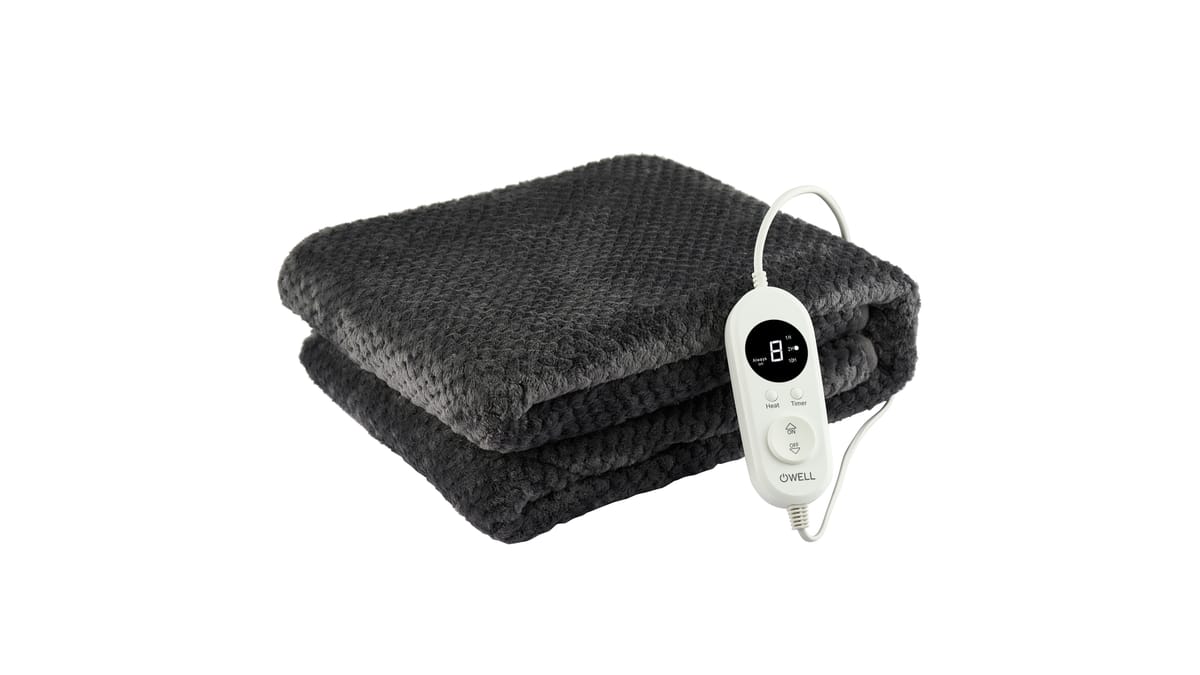
On cold nights many people would rather warm just the bed than turn up the heating in the whole flat. An electric blanket does it quickly and cheaply — but before buying, two questions usually come up: how much does it cost to run, and can you sleep on it safely? The first can be answered to the cent.
How much electricity does an electric blanket use
The energy use of any appliance is calculated the same way: power × running time. The power is printed on the rating label or in the specifications.
Take the OW 7449 heated underblanket, rated at 60 W:
- 1 hour at full power: 60 W × 1 h = 0.06 kWh,
- a whole night (8 hours): 60 W × 8 h = 0.48 kWh,
- a month at 8 hours a day: about 14.4 kWh.
To convert this into money, multiply the result by the price per kWh on your electricity bill. At an example price of €0.35 per kWh, a whole night costs at most about 17 cents and a month about €5.
That is the upper limit. On lower settings the heating element does not run continuously, so actual use is lower. You save the most by pre-warming the bed on a higher setting before you go to sleep and then lowering the temperature or setting the timer for the night — the OW 7449 has a 1–10 hour timer.
For comparison: the OW 7450 heating pad is rated at 100 W, but it is usually used for shorter, targeted sessions — an hour or two for the back or neck.
Is an electric blanket safe
Modern electric blankets are designed to be used against the body, including at night. Two things matter when buying:
- Overheat protection — switches the heating off if the temperature rises above normal. Both of our models have it.
- Timer — the blanket switches itself off even if you fall asleep with the heating on.
Safety also depends on how you use it. The most important rules:
- Use the blanket spread flat. Do not fold it, roll it up or put heavy objects on it while it is on.
- Do not use it when wet. After washing, the blanket must be completely dry before you reconnect the cable.
- Check the cable and plug. If there is visible damage, stop using the blanket.
- Do not stick pins or safety pins into it.
- It is not for everyone. Not for infants, young children or people who cannot feel overheating or cannot switch the device off themselves.
The exact rules for each model are always in the user manual — for our blankets you can download it from the product page.
Washing and storage
Blankets and pads with a detachable cable can go in the washing machine: the OW 7449 at up to 30 °C, the OW 7450 at up to 40 °C. After the season, store the blanket loosely folded, without pressure and dry — sharp creases damage the heating wires.
Summary
An electric blanket is one of the cheapest sources of warmth for the night: a 60 W blanket uses less than half a kilowatt-hour over a whole night. Choose a model with overheat protection and a timer, use it spread flat and according to the manual — and you won’t have to heat the whole bedroom.
- guide
- home