

Travel fridge: compressor or thermoelectric? How to choose
Two different cooling technologies, two different uses. We explain how they differ and when a thermoelectric (Peltier) fridge is all you need.
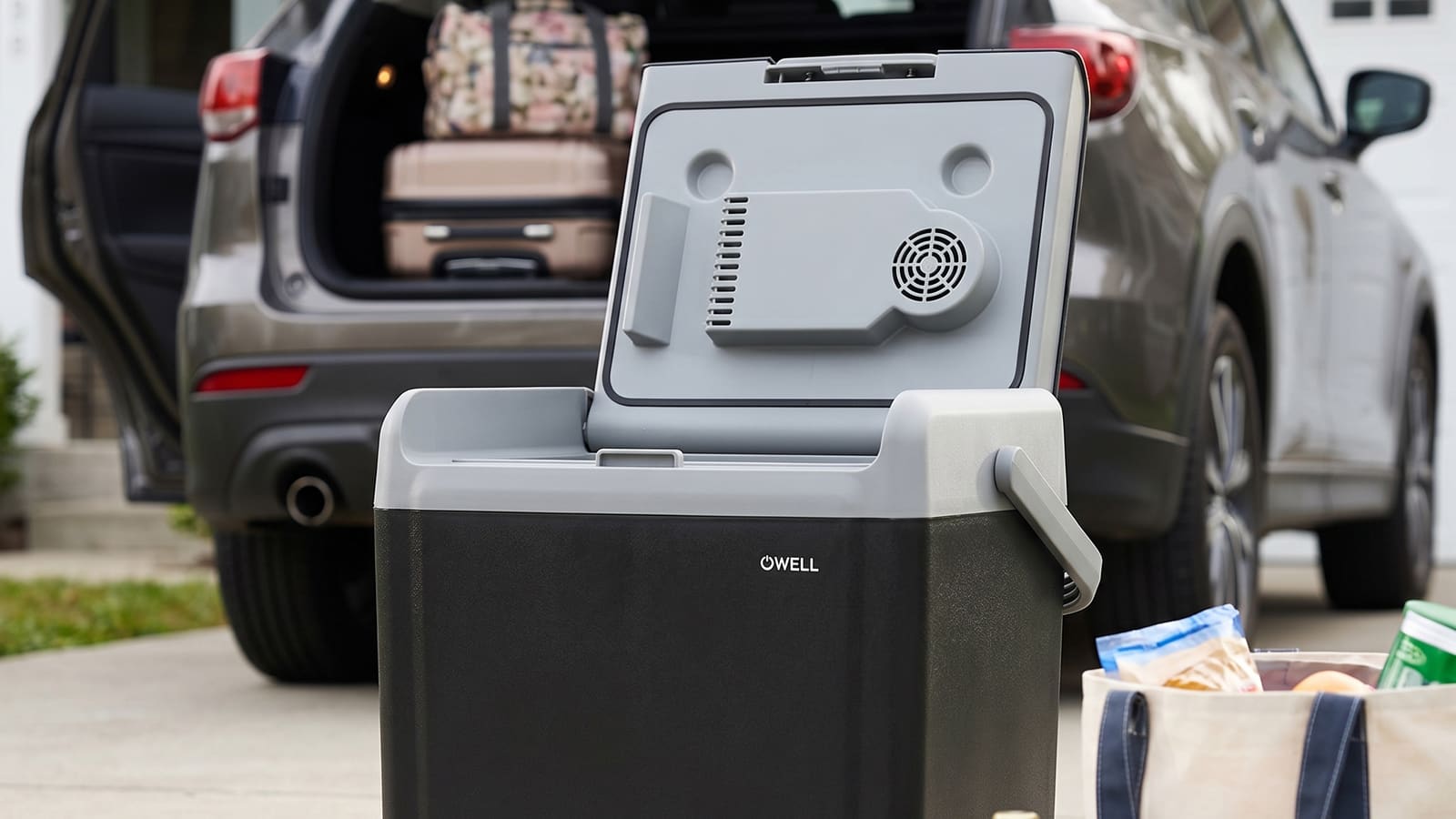
A travel fridge isn’t just a miniature version of the one in your kitchen. The market splits into two completely different cooling technologies, and picking the wrong one for your needs is the most common reason people end up disappointed with this kind of device.
Compressor vs thermoelectric — the basic difference
A compressor fridge works like a scaled-down version of a home fridge — it has a compressor and a refrigerant circuit. It can cool its contents well below ambient temperature, regardless of how hot it is outside. In exchange, it’s heavier, noisier while the compressor runs, and usually more expensive.
A thermoelectric fridge uses a Peltier element — a component that creates a temperature difference between its two sides once powered. It’s lighter, completely silent (no moving parts on the cooling side) and cheaper. The catch: it cools relative to ambient temperature rather than to a fixed absolute value — the hotter it is outside, the smaller the difference it can achieve inside.
When thermoelectric is enough
If you’re looking for something to:
- keep drinks and snacks cool while camping or on the road,
- maintain the temperature of items that are already cold (rather than cooling something from scratch),
- use on short to medium trips where you have daily access to power (a car or mains socket),
— Peltier technology is all you need, at a noticeably lower price and weight. A compressor fridge makes sense when you need to hold a low temperature for many days without access to power, in high ambient heat, or when you need to freeze something.
What to look at when buying
- Temperature difference relative to ambient (for thermoelectric models) — the manufacturer should state it directly, not just say it “cools”.
- Power source — whether it runs from a car socket (12V), a mains socket (230V), or both. Two sources mean more flexibility without buying extra adapters.
- Insulation thickness — thinner insulation means faster loss of cold once power is disconnected.
- Heating function — some thermoelectric models work in both directions and keep warm food warm (they don’t heat cold food — an important distinction).
- Capacity relative to your actual needs — 20–25 litres is a typical size for a weekend trip for 2–3 people, not a week-long family camping trip.
An example: our thermoelectric fridge
Our OW 8805 model has a 22 l capacity, a Peltier element with 37 mm PU insulation that keeps the interior around 16–20°C below ambient, and two power sources (DC 12V and AC 230V) with ECO/MAX modes. You’ll find the full specification, including dimensions and weight, on the product page — and other models in this category on the travel fridges page.
- guide
- travel appliances